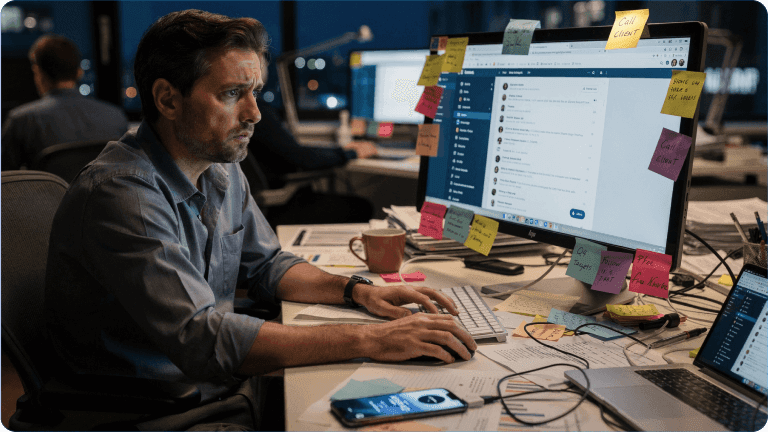
11x (Alice) and Artisan (Ava) both sell a version of the same promise: an autonomous AI worker that finds prospects, writes and sends outreach, and books meetings without a human running the sequence day to day. For some teams, particularly those trying to scale outbound volume without hiring more SDRs, that promise is genuinely appealing and the products deliver real automation.
For other teams, the same pitch raises a flag. Fully automated outbound at scale carries brand risk if messaging goes out under a company's name with no review step. Buyers have gotten sharper at spotting AI-generated outreach, and backlash toward obviously automated emails is a real and growing concern for sales leaders. Complex or high-value deals often need human judgment that an autonomous agent is not built to apply. And the contracts are not small: reported 2026 pricing for 11x's Alice starts around $3,750/month billed annually, which several sources translate to roughly $45,000 to $60,000 a year for a single digital worker (approximate, third-party estimate, confirm before publishing). Artisan's Ava is reported in a similar range, commonly cited between $1,500 and $5,000 a month depending on seats and data volume, with annual commitments the norm rather than the exception (approximate, third-party estimate, confirm before publishing).
If any of that gives you pause, this post is for you. It covers what 11x and Artisan actually do well, why teams look for alternatives, and where a human-in-the-loop approach like Flyfish fits differently. It also covers a couple of other alternative directions briefly, because a fully autonomous AI SDR is not the only category worth considering.
What 11x and Artisan Do Well
Give both products credit where it is due. 11x built real category awareness around the "AI SDR as digital worker" narrative, and Alice is positioned toward enterprise buyers who want to increase outbound volume without expanding headcount. Artisan built a similarly strong narrative around Ava, with a distinct brand persona and a clear promise: outbound automation across prospecting, enrichment, multi-channel sequencing, reply handling, and meeting booking, with campaign testing built in.
Both are genuinely useful for the specific problem they solve: running always-on outbound volume with less manual sequencing work than a traditional SDR team requires. If your bottleneck is pure volume, and you are comfortable with a fully automated send process, both products are credible options with real traction.
Why Teams Look for Alternatives
The reasons teams look past 11x and Artisan tend to cluster around a few themes.
Brand risk from fully automated outbound. When an AI system is drafting and sending messages under your company's name with no rep reviewing the final copy, a bad batch of messaging is not a minor problem. It happens at scale before anyone catches it.
Buyer skepticism toward AI-generated outreach. As more inboxes fill up with obviously AI-written cold email, some buyers have started reacting negatively, which can work against the very campaigns these tools are meant to run.
Complex or high-value deals need judgment an autonomous agent does not have. For simple, high-volume, low-ticket outbound, automation makes sense. For complicated sales cycles with multiple stakeholders and real strategic nuance, most sales leaders still want a rep making the calls on tone, timing, and framing.
Cost of enterprise annual contracts. Both tools carry meaningful annual commitments that are a bigger ask than a typical self-serve sales tool, and the commitment comes before a team has necessarily proven the automation-first model works for their specific market.
Wanting reps in the loop, not replaced. Some sales leaders are simply not looking to replace SDRs with software. They want their reps to sell better and faster, not to hand the keyboard to an autonomous agent.
None of this means 11x or Artisan are bad products. It means the fully autonomous model is a specific bet, and it is not the right bet for every team.
The Human-in-the-Loop Alternative: Flyfish
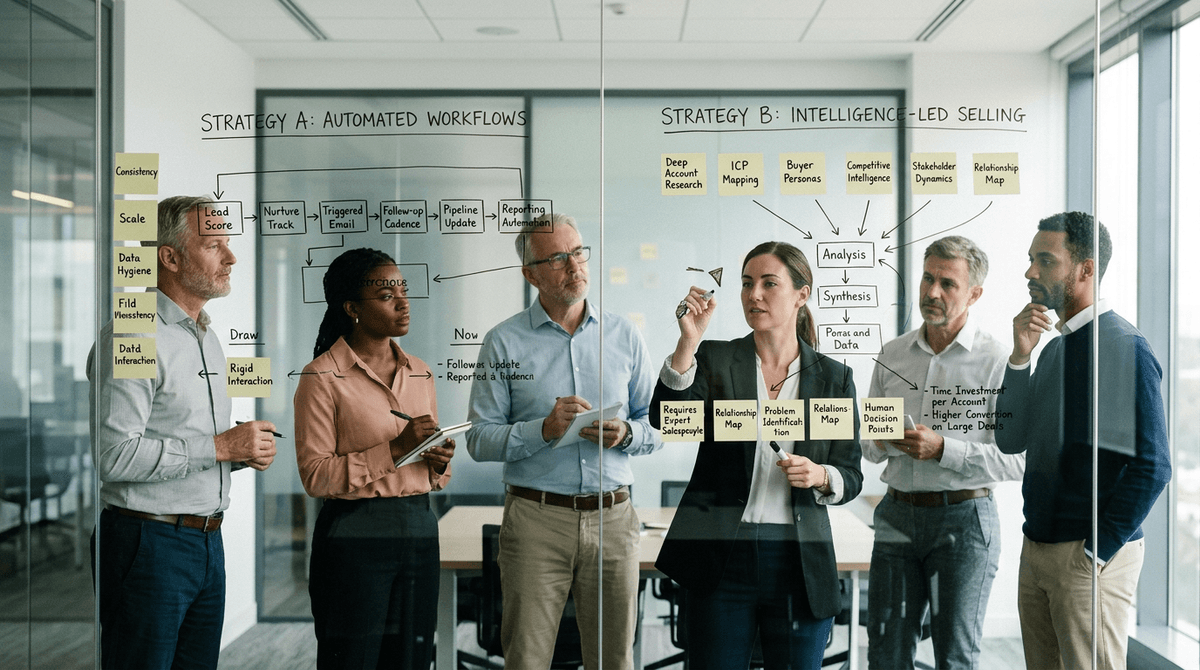
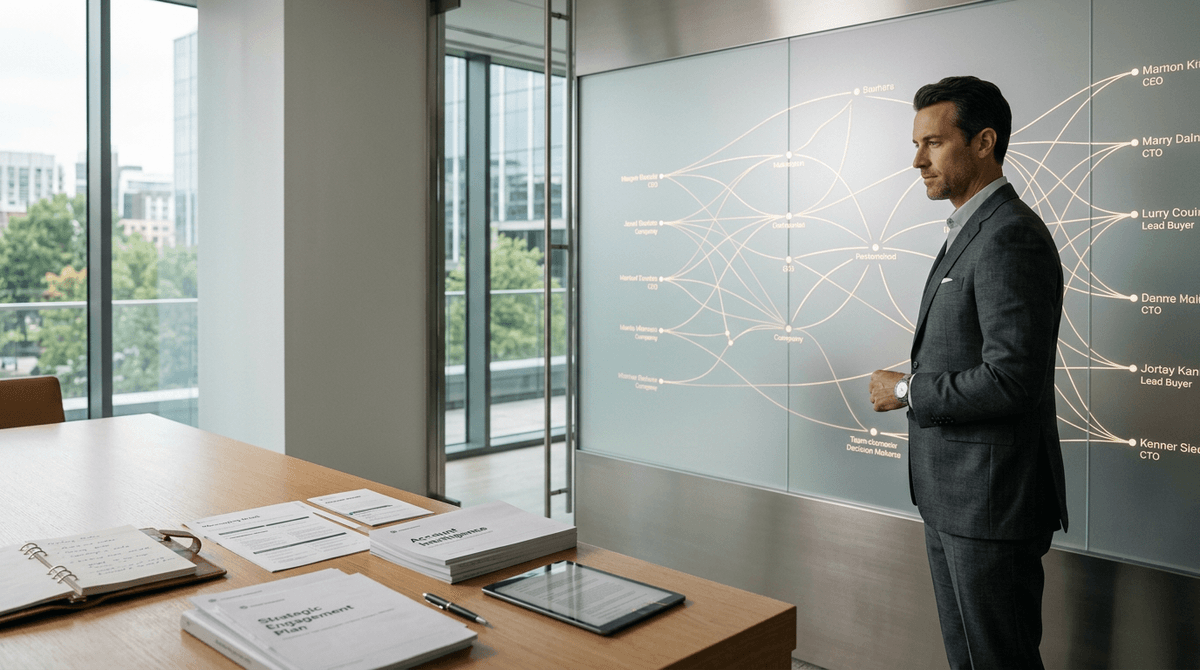
Flyfish takes a different position entirely. Instead of an autonomous agent that emails and books meetings on its own, Flyfish is built to arm the rep with intelligence and ready-to-use assets, so the rep is still the one deciding what to say and when to send it. The AI does the research and the synthesis; the human still owns the conversation.
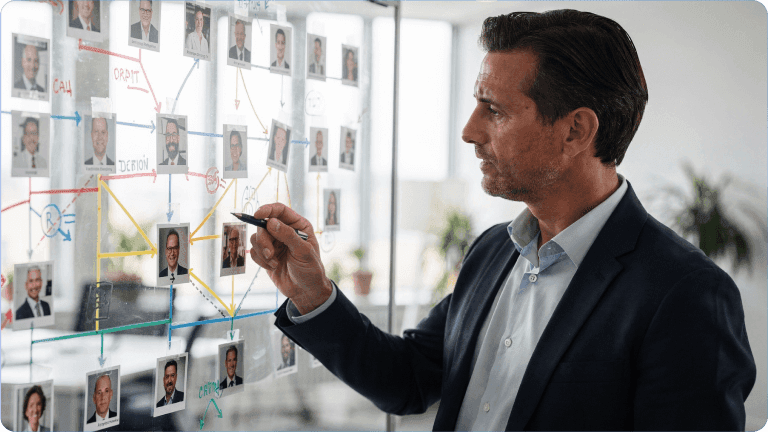
In practice, that means Flyfish turns scattered account research into a plan: account insight, a messaging angle tailored to the specific buyer, a battlecard, a relationship map of who else is likely involved, and meeting prep before a call. A rep using Flyfish still writes the email and still makes the call. What changes is how much manual research and guesswork stands between "I have a name" and "I know what to say and who else needs to hear it."
This is a genuinely different bet than 11x or Artisan are making, not a smaller version of the same bet. 11x and Artisan are trying to reduce the number of humans involved in outbound. Flyfish is trying to make the humans who are involved faster and sharper, without the brand risk of unreviewed automated sends and without asking a company to commit to a $40,000-plus annual contract before proving the model works for their specific buyers.
Comparison Table
| 11x (Alice) | Artisan (Ava) | Flyfish | |
|---|---|---|---|
| 11x (Alice) | Artisan (Ava) | Flyfish | |
| Model | Autonomous AI SDR, sends and books meetings independently | Autonomous AI BDR, sends and books meetings independently | Human-in-the-loop, arms reps with intelligence and ready-to-use assets |
| Best at | Always-on outbound volume without adding headcount | Multi-channel outbound automation with reply handling and campaign testing | Account research, messaging strategy, battlecards, meeting prep for reps |
| Brand/review risk | Higher, messages often go out with limited human review | Higher, similar automation-first model | Lower, rep reviews and sends every message |
| Typical pricing | Reported to start around $3,750/mo, annual commitment (approximate, confirm before publishing) | Reported $1,500-$5,000/mo depending on seats and volume, annual commitment common (approximate, confirm before publishing) | Positioned as a workflow layer for reps, not a replacement headcount cost |
| Best fit | Teams wanting to scale volume without more SDR hires | Teams wanting a similar automation-first bet with a different brand feel | Teams wanting reps to stay in control while working faster |
11x (Alice)
Artisan (Ava)
Flyfish
11x (Alice)
Artisan (Ava)
Flyfish
11x (Alice)
Artisan (Ava)
Flyfish
11x (Alice)
Artisan (Ava)
Flyfish
11x (Alice)
Artisan (Ava)
Flyfish
11x (Alice)
Artisan (Ava)
Flyfish
A Couple of Other Alternative Directions Worth Knowing About
To be genuinely comprehensive, it is worth mentioning two other directions teams take instead of an autonomous AI SDR.
Building your own AI-assisted workflow with Clay. Some GTM-ops-heavy teams choose to build their own enrichment and research workflows in Clay, then route the output to reps or a sequencer themselves. This gives full control over the process, but it requires real setup time and someone comfortable owning workflow design, which is a different tradeoff than either the autonomous AI SDR model or a ready-made intelligence layer like Flyfish.
Sticking with a data-plus-engagement combo like Apollo. Teams that are not ready for either an autonomous AI SDR or a dedicated intelligence layer sometimes simply stay with a database-and-sequencing tool like Apollo, using its built-in AI features for lighter-weight assistance while reps do the strategic thinking manually. It is a lower-risk, lower-cost starting point, though it leaves the research-to-messaging gap unsolved.
Verdict
If your team wants to scale outbound volume and is comfortable with a fully automated send process, 11x or Artisan are reasonable, proven options, provided you are clear-eyed about the brand risk and the size of the annual commitment. If you want your reps to stay in control of the conversation while working with sharper, faster research and ready-to-use assets, Flyfish is built specifically for that model. And if you are not ready for either commitment yet, building your own workflow in Clay or running a data-and-engagement combo like Apollo are legitimate lower-cost starting points, just with more manual work left for the rep.
Frequently Asked Questions
What is a good 11x alternative for teams that don't want full automation? Flyfish is built as a human-in-the-loop alternative: it generates account intelligence, messaging, and meeting prep for reps to use, rather than sending outreach autonomously the way 11x's Alice does.
Is Artisan's Ava worth the cost compared to alternatives? It depends on your risk tolerance for automated sends and your budget for an annual contract. Reported pricing for Ava ranges widely across sources, roughly $1,500 to $5,000 a month depending on seats and volume (approximate, confirm before publishing), which is a meaningful commitment before proving the automation-first model fits your market.
Do human-in-the-loop tools still use AI? Yes. The difference is not whether AI is involved, it's who has final control over what gets sent. Flyfish uses AI to do the research and generate the assets; the rep still decides what to say and when to send it.
Can I use Clay or Apollo instead of an AI SDR tool like 11x or Artisan? Yes, and some teams do. Clay lets you build your own research and enrichment workflow if you have the ops resources to set it up. Apollo gives you a data-plus-sequencing combo out of the box. Neither replicates the autonomous send-and-book-meetings model of 11x or Artisan, and neither packages research into ready-to-use messaging the way Flyfish does.
Why do some sales leaders avoid fully autonomous AI SDR tools? The main concerns are brand risk from unreviewed automated messaging, buyer skepticism toward obviously AI-generated outreach, and a preference for keeping reps involved in strategic, high-value conversations rather than replacing them entirely.